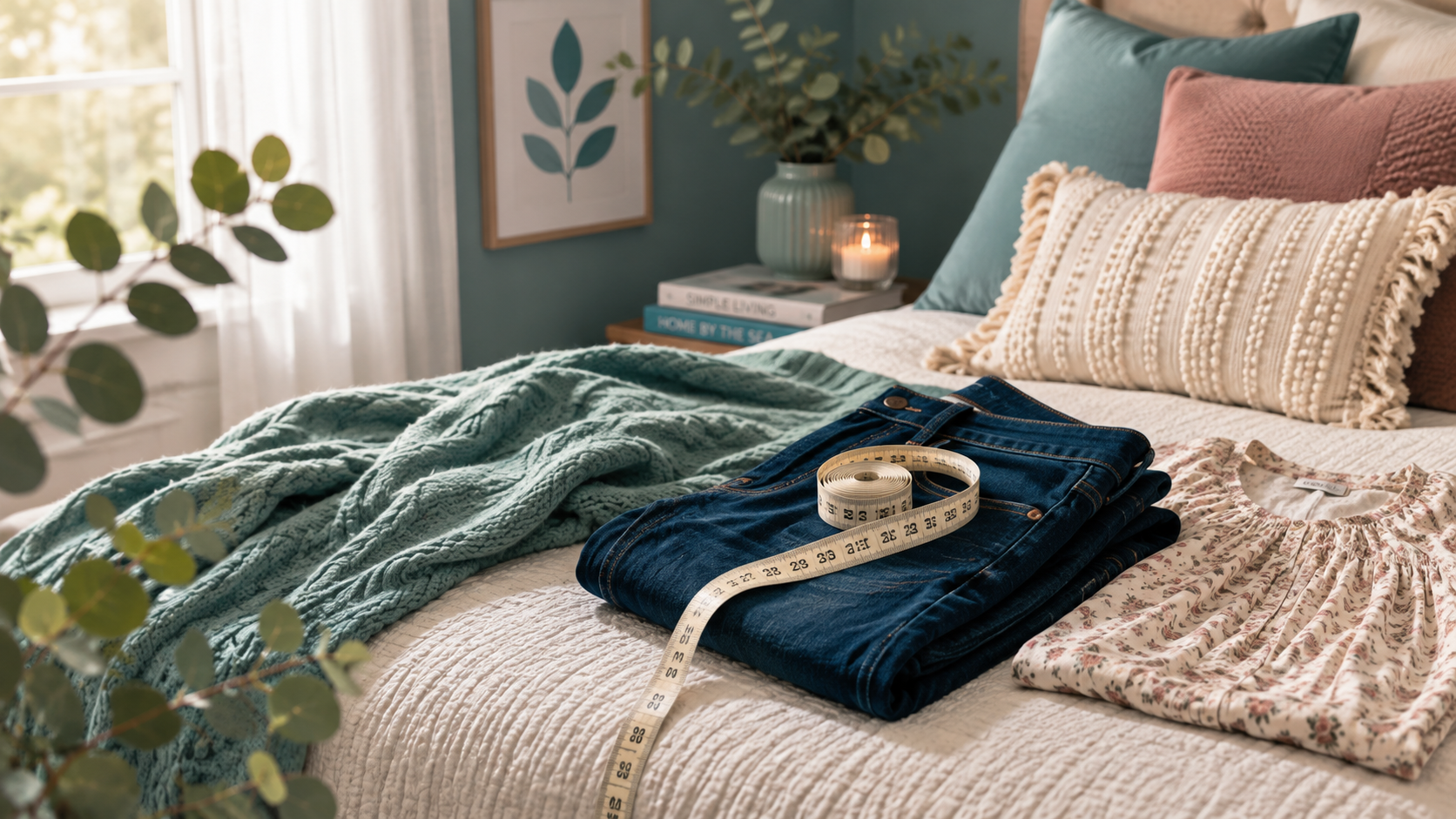

A great pair of pants or a pretty dress can still look off if the hem ends in the wrong spot. Length is one of the easiest things to get wrong when you’re petite, and one of the easiest to fix once you know what to aim for. Think of this as your cheat sheet.
The short answer: The best length for petite pants is a hem that rests lightly on your shoe for full-length styles or ends at or just above the ankle bone for ankle pants. Skirts look best at the knee or just below it, and midi hems should end at the narrow part of the lower calf.
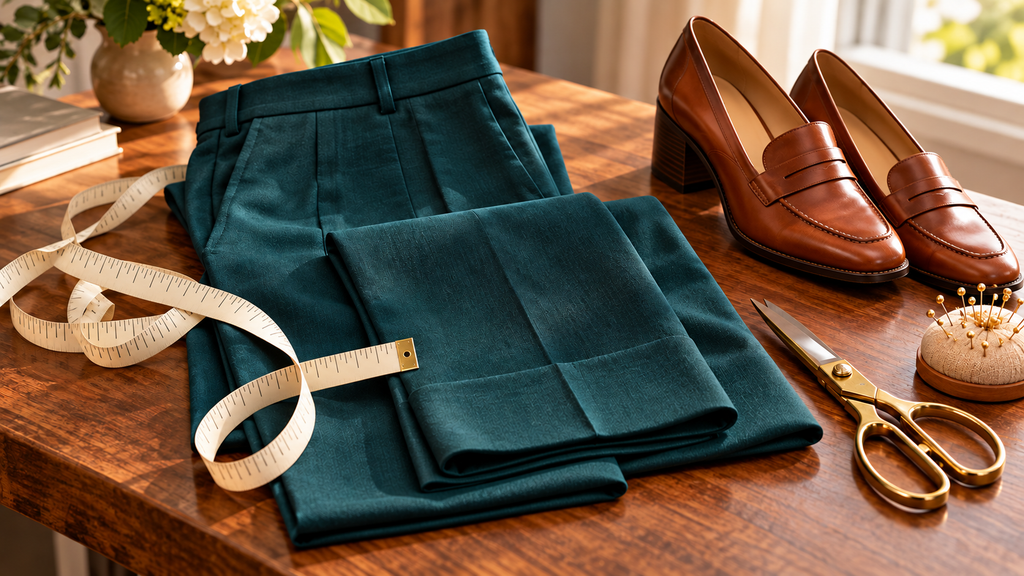
Why the wrong hem makes you look shorter
Your eye follows the longest unbroken line on the body, so a hem that pools over your shoe or stops at the widest part of your calf makes your legs look shorter. Regular (non-petite) sizes are cut for a taller body, so when a regular-size piece fits everywhere but the length, it’s the garment, not you.
What is the best length for petite pants?
The best length for petite pants depends on the style: full-length pants should rest lightly on your shoe, and ankle pants should end at or just above the ankle bone. Here’s where each hem should land:
- Full length: The front of the hem rests lightly on the top of your shoe, and the back sits just above the floor. Fabric that bunches at the ankle is too long.
- Ankle pants: The hem ends at or just above the ankle bone. A little skin at the ankle makes the leg look longer.
- Cropped pants: Aim for the narrowest part of the lower leg, just above the ankle. A crop that ends at the fullest part of the calf shortens the leg.
Read the listed inseam rather than the style name. “Ankle” and “cropped” pants in regular sizes are cut for a taller leg, so the pant leg is longer on you. A regular ankle pant can reach the top of your shoe, and a regular crop can land at your ankle instead of above it.
What length should petite pants be with heels or flats?
Hem your pants for the shoes you’ll wear most. In heels, the distance from your crotch to the top of your shoe barely changes, but the back of your heel sits higher off the floor. That’s why pants for heels are usually hemmed a little longer, so the back of the hem still falls close to the floor. Those same pants will drag in flats, and pants hemmed for flats can look short with heels.
If you wear both, go with the pair you reach for most often. Wide-leg and straight styles are the most sensitive to this, since the hem is the main thing people see.
What about ankle boots?
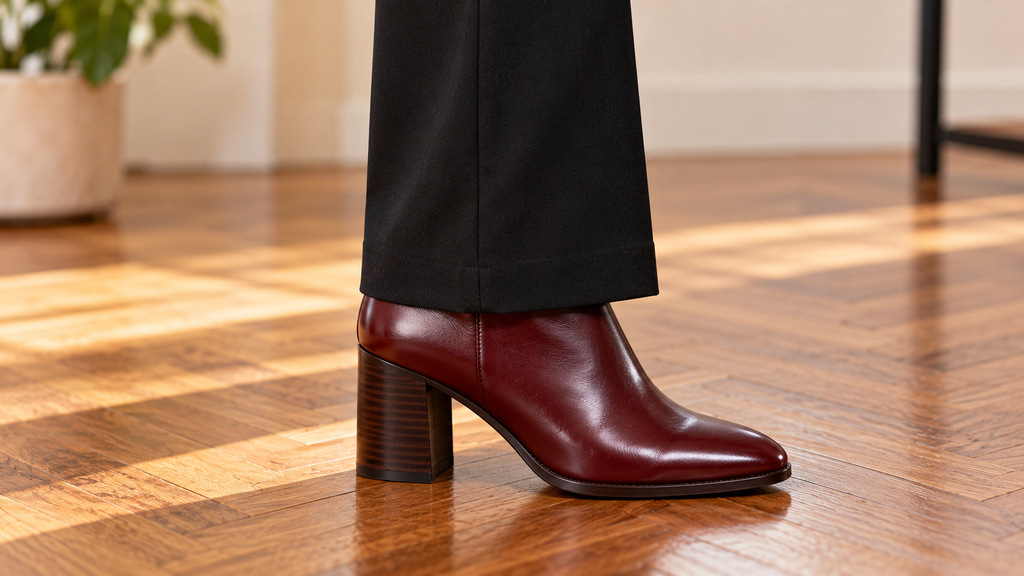
With ankle boots, aim for a hem that meets the top of the boot or falls over it. Slim and straight pants can end right at the boot’s top edge, while wider legs look best long enough to cover the boot. A gap of an inch or two between the hem and the top of the boot can break the leg line.
Where should a skirt hit on a petite woman?
On a petite woman, a skirt should hit at the knee, just below the knee or at the narrow part of the lower calf. Those are the slimmest points of the leg:
- At the knee: The hem touches or just covers the top of the kneecap. It’s the easiest length to wear and shows the most leg.
- Just below the knee: The hem ends just below the kneecap, before the calf starts to widen. It’s a polished length for work.
- Midi: The best midi length for petites ends at the narrow part of the lower calf, above the ankle. A block heel or a pointed toe helps lengthen the line.
The spot to avoid is the widest part of your calf. A hem there cuts the leg at its fullest point. Moving the hem up or down an inch usually fixes it, so check in the mirror before you decide.
What is the best petite dress length?
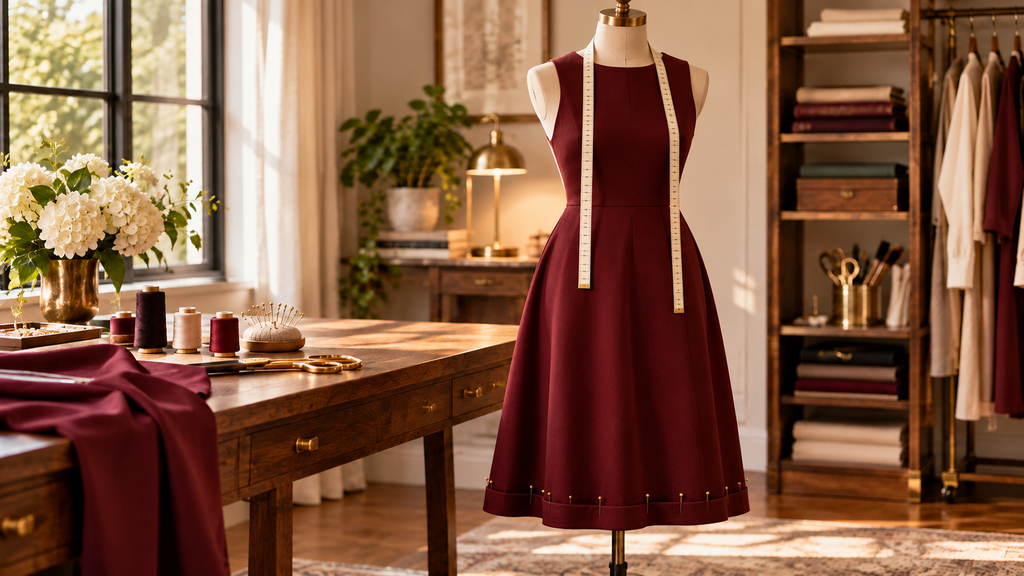
A dress hem should land at one of the same spots as a skirt, and the waist seam should sit at your natural waist. When the waist seam hangs too low, the whole dress looks longer and your legs look shorter.
For most dresses, that means at the knee, just below it or at the narrow part of the lower calf. Maxi dresses are the exception. Their hem should skim the top of your shoe.
If you’re between two lengths, go longer. A tailor can take up a plain hem, but there’s no adding length to a dress that’s too short.
How to measure your petite inseam and clothing length
The easiest way to shop online is to know your numbers before you look. Grab a soft tape measure and the clothes that already fit you well and match each measurement to what retailers actually list.
Pants (retailers list the inseam):
- Measure the inseam of your best-fitting full-length pants, from the crotch seam to the hem. This is your full-length target.
- Measure the inseam of a pair of ankle pants you like. This is your ankle target. Cropped pants will run a bit shorter.
- No pair that fits? Measure your body from the crotch to your ankle bone for an ankle-length target. For full length, put on your usual shoes and measure from the crotch to the top of your shoe.
Here’s how to use your numbers: Say your favorite ankle pants have a 25-inch inseam. If a listing shows a 27-inch inseam, that pair will land about 2 inches lower on your leg, closer to the top of your shoe. If it shows 24 inches, it will end about an inch higher, more like a crop.
Skirts (usually listed as length from the waist):
- Measure from where you wear your skirt waistband to the top of your knee: your knee-length target.
- Measure from where you wear your skirt waistband to the narrowest part of your lower calf: your midi target, which keeps the hem off the widest part of the calf.
Dresses (usually listed as length from the high point of the shoulder, where it meets your neck):
- Measure from the high point of your shoulder to the top of your knee: your knee-length target.
- Measure from the high point of your shoulder to the narrowest part of your lower calf: your midi target.
Save these numbers in a note on your phone. When you shop, compare them to the listed inseam or length. For bust, waist and hip measurements, see my Petite Sizing Guide: How To Measure For A Fit You Can Trust.
Should you buy petite or have regular clothes hemmed?
Buy petite when a regular-size piece is too long in more than one place, and hem a regular size when length is the only problem. Hemming fixes the length, and only the length. Here are a few tailoring tips for petite pants, skirts and dresses:
- Hem a regular size when everything fits except the length and you need to take off an inch or two. Hemming pants for petites is usually an easy job for a tailor when the hem is plain, and the same goes for simple skirts.
- Buy petite when the piece is long in more than one place, like the rise, the sleeves or the knee. A petite cut adjusts all of those, and a hem can’t.
- Think twice when the hem has details like a slit, a vent, a wide cuff or a scalloped or embroidered edge. Taking off more than an inch can throw off the shape.
- Bring your shoes to the fitting so the tailor pins the right length.
Not sure what petite really changes? My article on petite vs. short vs. regular sizing explains the labels.
The bottom line
A hem that lands in the right spot can make an outfit look like it was made for you. Aim for the slim points of the leg, know your numbers before you shop, and hem the item when length is the only thing that’s off.
Pin this cheat sheet for your next shopping trip. When you’re ready to shop, my 10 Best Petite Pants for Women: Work, Travel & Everyday lists the inseam for every pair.