

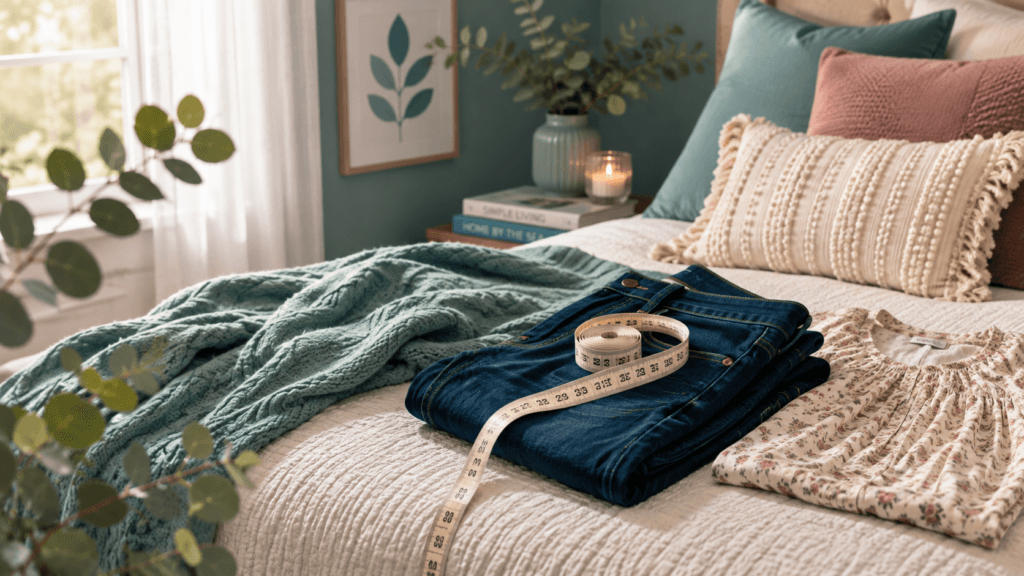
Style names and size labels only get you so far — a “petite small” from one brand can fit completely differently than a “petite small” from another. The most reliable way to shop is to measure something you already own, something that actually fits and that you reach for again and again, and compare those numbers to the brand’s size chart before you buy.
A matching inseam tells you the length will likely work — it doesn’t guarantee the rest of the garment will fit the same way. Fit is more than one number, but length is the piece petite shoppers get wrong most often, and it’s the easiest to solve for in advance.
Below, we’ll walk through how to measure the clothes you already own — bottoms, tops, and jackets — plus how to measure your body directly if you don’t have a favorite piece to work from.
Before You Start
• Use a flexible fabric measuring tape, not a metal one.
• Lay the garment flat on a bed or table and smooth out wrinkles — don’t stretch the fabric.
• Measure one item per category (one pair of pants, one top, one jacket) rather than averaging across several pieces. Different styles fit differently, so pick the piece you’d actually buy more of.
• Round to the nearest quarter inch and write your numbers down — you’ll want them on hand every time you’re comparing a size chart.
Measuring Bottoms (Pants, Jeans, Shorts)
Pants come in different intended lengths too — a cropped pant, an ankle-length pant, and a full-length pant meant to be worn with a boot or heel all fit differently on a petite frame. Measure one of each length you already wear and love, rather than assuming one pair represents them all.
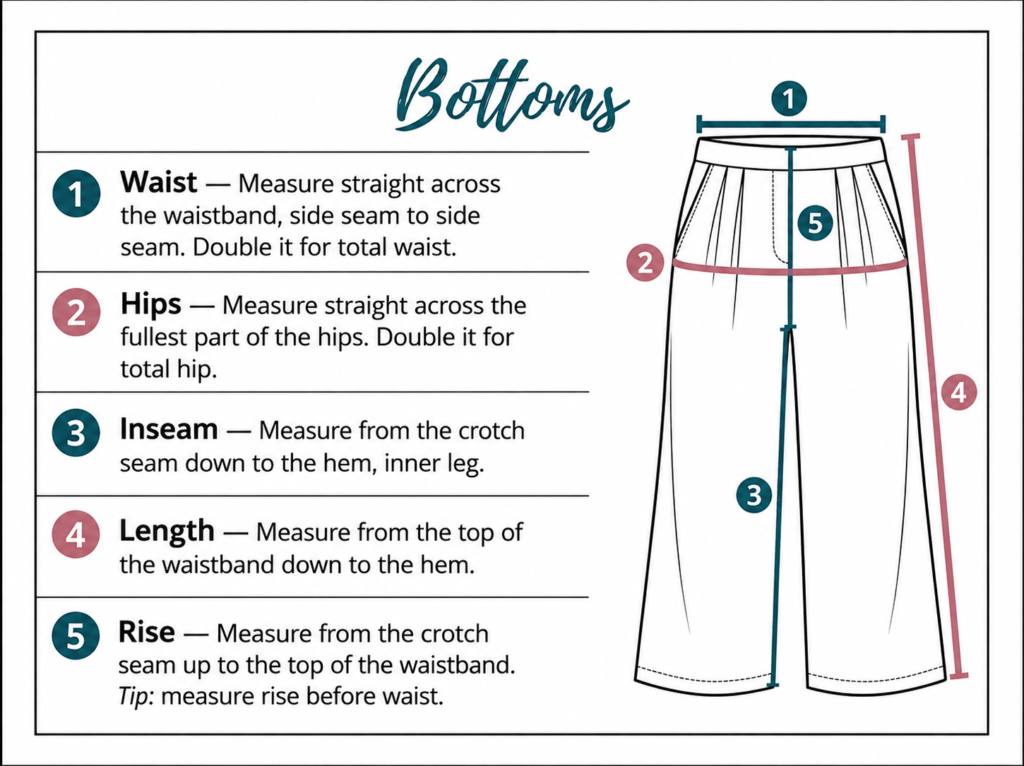
Length – Lay the pants flat. Measure from the top of the waistband straight down to the bottom of the hem. This is different from inseam — length gives you the full garment measurement, while inseam is just the inner leg. Both matter for petites, since two pairs with the same inseam can still sit differently depending on rise.
Rise – With the pants still flat and buttoned/zipped, measure from the top of the waistband straight down to the crotch seam. This tells you whether a pair runs low, mid, or high — and it matters as much as the inseam for how the pants sit on your frame.
Waist – Measure straight across the waistband, from seam to seam, then double it for the full measurement.
Hip – Measure straight across the widest part of the hip area (usually a few inches below the waistband), then double it.
Measuring Tops, Sweaters, and Dresses
Tops come in different intended lengths — a top meant to hit at the waist and a longer tunic meant to sit at the hip are two different categories, not one. Measure a piece from each length you own and love, rather than assuming one measurement covers every top in your closet.
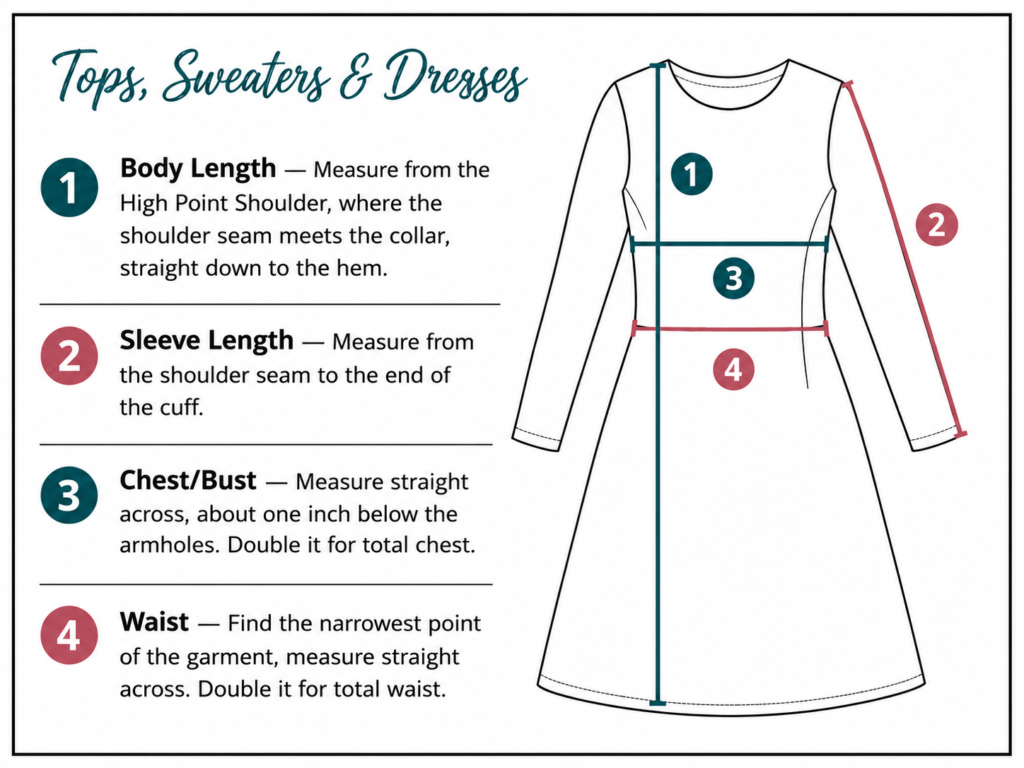
Sleeve length – With the sleeve laid flat and slightly extended, measure from the shoulder seam to the end of the cuff.
Sleeve measurements may vary: Some retailers measure from the shoulder, while others measure from the center back of the neck across the shoulder to the cuff. If a retailer provides its measurement method, check it before comparing the number with your own measurement.
Chest/Bust – Measure straight across the garment about one inch below the armholes, then double it.
Waist (for dresses) – Find the narrowest point of the garment’s waist seam or shaping, measure straight across, then double it.
Measuring Jackets and Outerwear
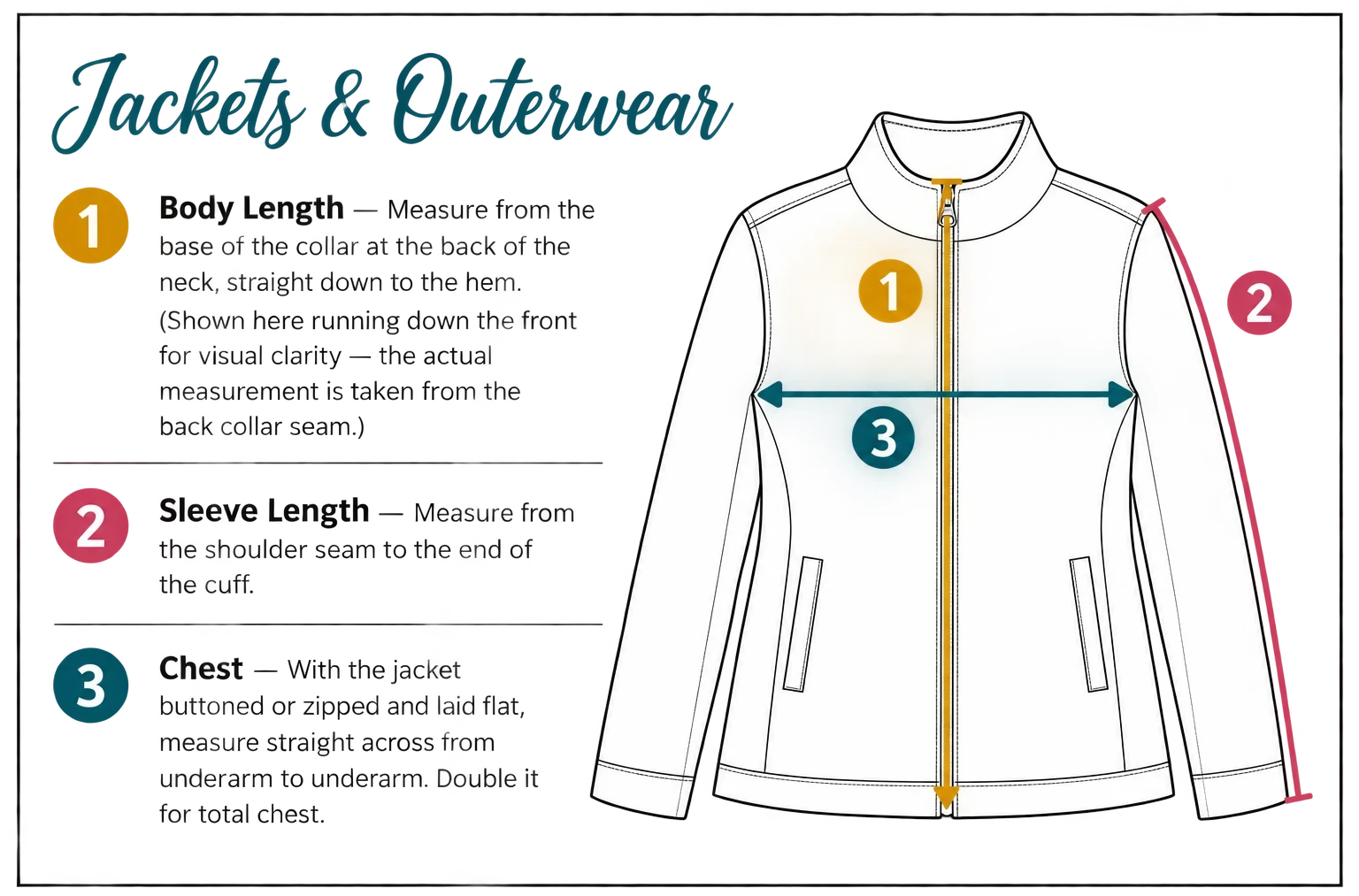
Jackets and outerwear are measured a little differently than tops — from the Center Back rather than the shoulder point, since that’s where most outerwear size charts start.
The same rule applies here as with tops: a cropped or hip-length jacket and a longer coat are different length categories. If you have a favorite of each, measure both separately rather than relying on one to represent the other.
Body length – Measure from the Center Back — the middle of the collar seam at the back of the neck — straight down to the hem.
Sleeve length – With the jacket laid flat, measure from the shoulder seam to the end of the cuff. (Some brands specify their own method — if a retailer’s chart calls out something different, we’ll note it in that specific product writeup.)
Chest – With the jacket buttoned or zipped and laid flat, measure straight across from underarm to underarm, then double it.
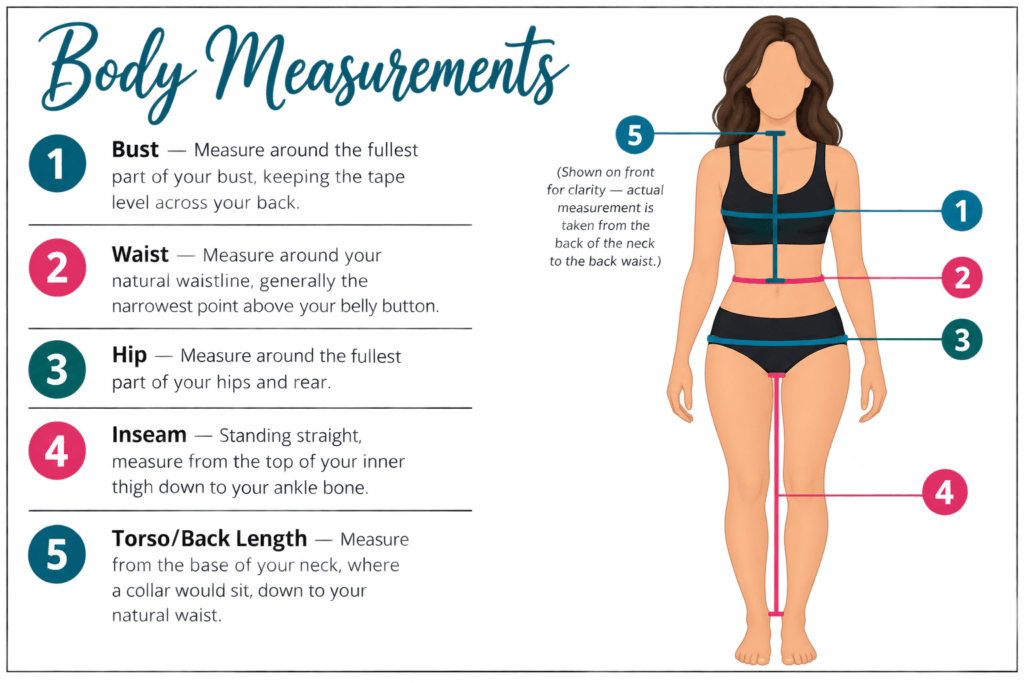
Don’t Have a Favorite Piece to Measure? Measure Your Body Instead
If you don’t have a go-to item in a category yet, you can take these measurements directly on your body. Wear form-fitting clothing (or measure over just a bra and underwear) and keep the tape snug but not tight.
Waist — Measure around your natural waistline, generally the narrowest point above your belly button.
Hip — Measure around the fullest part of your hips and rear.
Inseam — Standing straight, measure from the top of your inner thigh down to your ankle bone.
Torso/back length — Measure from the base of your neck (where a collar would sit) down to your natural waist. This is a helpful number for judging whether a top or dress will hit at the right length before you buy. Bust — Measure around the fullest part of your bust, keeping the tape level across your back.
Waist — Measure around your natural waistline, generally the narrowest point above your belly button.
Hip — Measure around the fullest part of your hips and rear.
Inseam — Standing straight, measure from the top of your inner thigh down to your ankle bone
Torso/back length — Measure from the base of your neck (where a collar would sit) down to your natural waist. This is a helpful number for judging whether a top or dress will hit at the right length before you buy.
Body measurements are a great starting point, but keep in mind: a size chart tells you what a garment measures, not how it will feel once you’re moving in it. Whenever you can, comparing to a piece you already love and wear will get you closer to a confident fit.
Keep This Guide Handy
Save or bookmark this page — every product roundup on Picks for Petites links back here, and having your own measurements on hand makes comparing against a brand’s size chart quick instead of a guessing game.