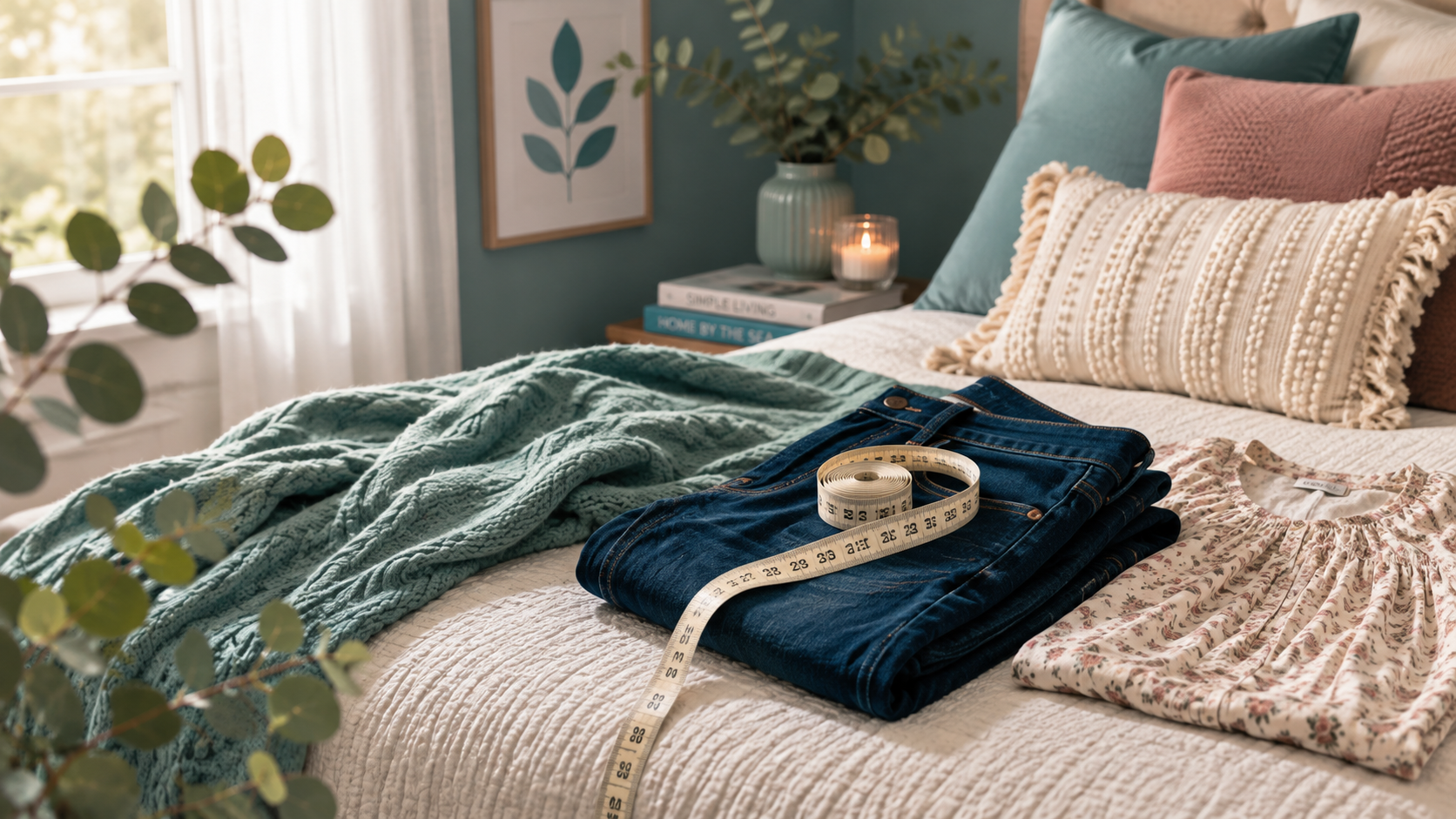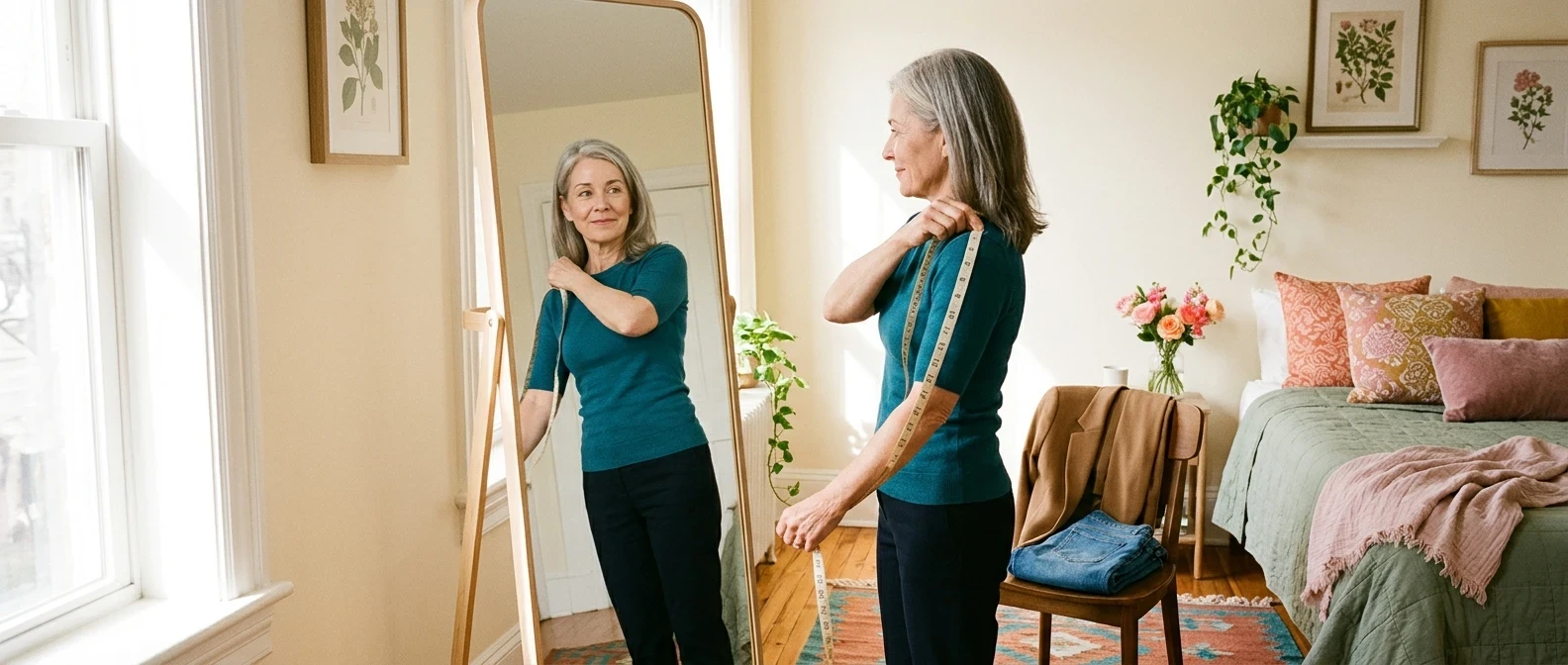

If you’ve ever pulled on a sweater, then a coat, and caught your reflection looking more like a pile of fabric than an outfit, you’re not alone. Layering is tricky on a petite frame, because even pieces that fit well on their own can add up to too much fabric once you stack them. The good news is that a few simple rules fix most of it.
The short answer: To style petite clothing in layers for cold weather, wear three thin layers in a set order: a close-fitting base, a fine-knit middle layer, and a coat cut to fit over both. Thin layers trap warmth without adding width. Keep necklines open, sleeves ending at the wrist, and hems either matched or clearly staggered.
What is the right order for layering petite clothing?
Layer from the thinnest, closest-fitting piece out to the coat. Each layer should fit over the one beneath it without adding extra length or width.
- Base layer: a thin, close-fitting knit that ends around the top of your hip.
- Middle layer: a fine-knit sweater, cardigan, or vest for warmth.
- Outer layer: a coat that fits over your middle layer with the shoulder seam still at your shoulder.
Three thin layers keep you warm because each one traps a little air. They also keep your outline slim, which a single thick layer can’t do.
Three Outfit Formulas to Try This Week
These work as templates, so swap in the colors you already own. Each one keeps hems under control and necklines open.
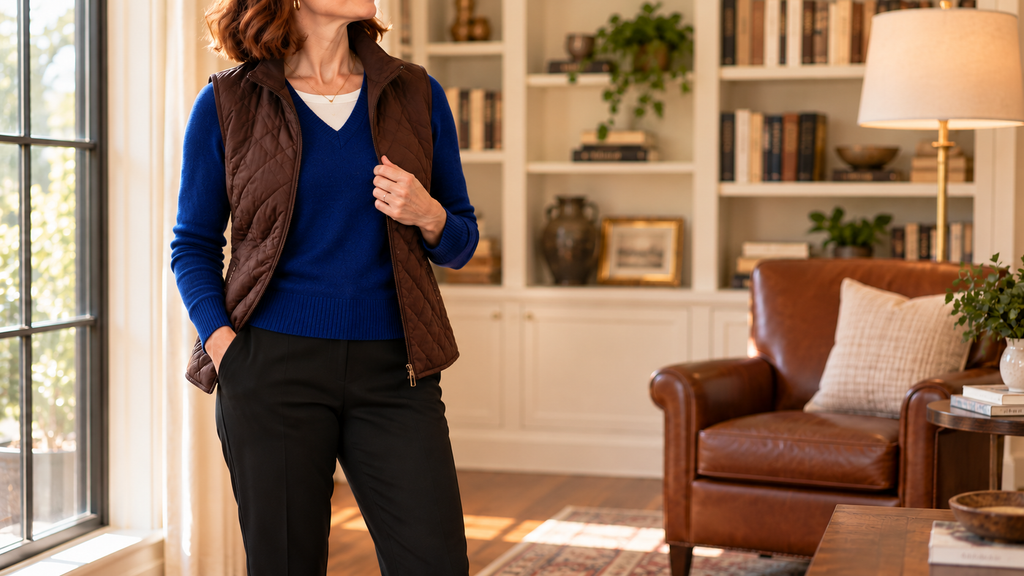
Formula 1: The everyday stack
- Thin, fitted long-sleeve base layer with a low scoop neck
- Fine-knit V-neck sweater ending at the top of the hip
- Straight ankle-length pants in a mid or high rise
- Hip-length coat with a small stand collar or narrow collar

The coat ends a few inches below the sweater, so the hems look staggered on purpose, and the ankle hem lengthens the leg.
Formula 2: The knit dress
- Thin base layer under a fine-knit sweater dress that ends at or just below the knee
- Opaque tights in the same color as your boots
- Knee-length coat worn open

Matching tights and boots make one long line from the hem down, so the dress doesn’t cut your height in half.
Formula 3: The weekend outfit
- Thin base layer and a fine-knit cardigan worn open
- Leggings or straight pants with an inseam that ends at or just above the ankle
- Low boots or clean sneakers
- Hip-length jacket
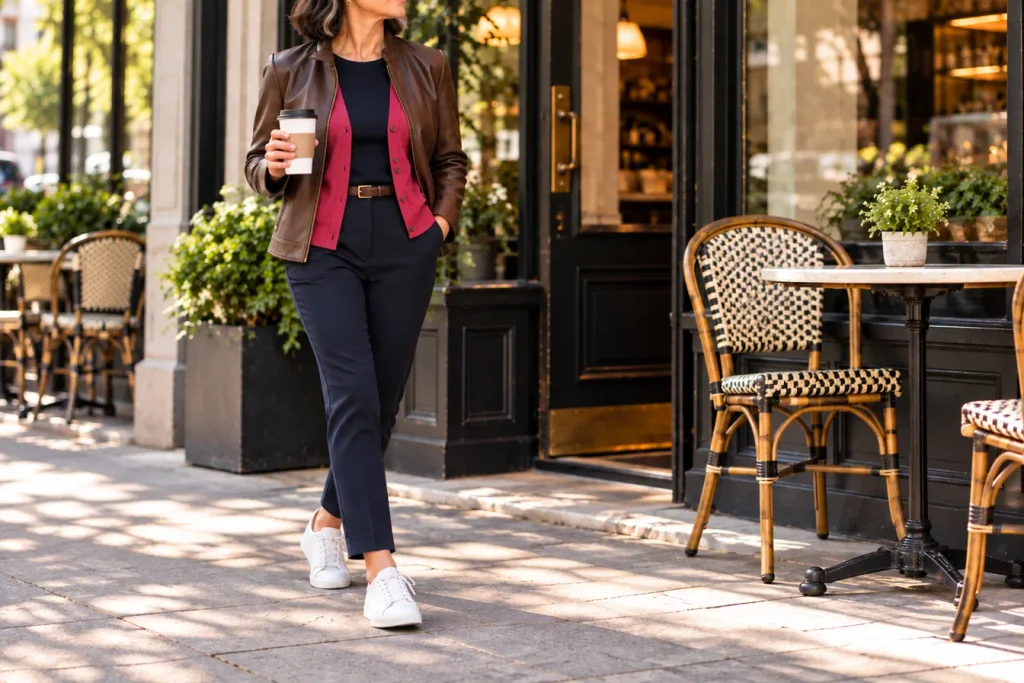
The open cardigan keeps a vertical line down the front, even with a jacket on top. For a little more polish, tuck in the base layer and add a slim belt to define your waist.
Why do layers make petite women look bulky?
Layers look bulky on a petite frame when they stack up at the same spots: the hem, the wrist, and the neckline. Three hems ending at the hip and three sleeves bunching at the wrist read as horizontal bands instead of one long line.
Before you decide an outfit is too much, check four spots:
- Shoulder seams: at the edge of your shoulder bone.
- Hems: at clearly different points, or all at one clean line.
- Sleeve ends: at the wrist, not bunched past it.
- Necklines: opening up, not stacking.
Start With a Thin Base Layer That Fits
The base layer does the quiet work of keeping you warm, so it should fit close and stay out of sight. A base that’s too big bunches under everything and adds more bulk than any sweater.
- Length: ending around the top of your hip, or a little lower if you’ll tuck it.
- Sleeves: cuffs at the wrist bone, so they don’t lump at the forearm.
- Fabric: thin knits in merino, modal, or a silk blend. Check the fiber content in the listing.
- Neckline: a low crew or scoop neck that sits below your sweater’s neckline.
If base layers always run long on you, try a bodysuit. It can’t untuck, and it won’t bunch at your waistband.
Are chunky sweaters bad for petite women?
Chunky sweaters aren’t off limits, but fine-gauge knits layer much better on a petite frame. Thick cables and ribbing add visual width across the hips and upper arms, and they take up the room your coat needs.
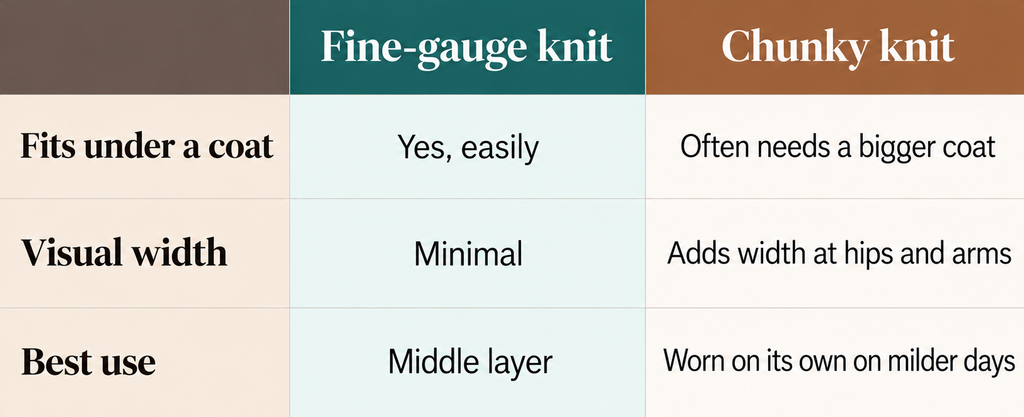
If you love texture, put it in a scarf or the outer layer and keep the middle layer smooth.
The Middle Layer: Fine Knits and Open Fronts
The middle layer is where most of your warmth comes from, so it’s worth getting the fit right. Look for a fine knit that sits close without clinging.
- Shoulder seam on your shoulder bone. If it hangs down your arm, the sweater looks borrowed.
- Hip-length body. It’s the easiest length to wear under a coat.
- Open or V neckline. It lengthens the neck and gives the base layer’s neckline somewhere to go.
- Smooth, flat knit. It lies flat under the outer layer.
A cardigan worn open creates a long vertical line down the front. A thin quilted or knit vest warms your core without adding bulk at the sleeves. My petite sweater picks have sizes, prices, and measurements for fine knits.
How can color make layers look less bulky?
Keeping your base layer, pants, and shoes in one color family creates a long column that makes layers look slimmer. Every strong color change adds a horizontal break, and on a short frame those breaks add up.
Let the outer layer bring the contrast. A black base layer, black pants, and black boots under a camel or deep teal coat worn open is an easy example.
If you want contrast in the middle layer too, wear it open, like a cardigan or vest, so the column still shows down the center.
Hems and Sleeves That Don’t Pile Up
Hems are where layering looks planned or looks accidental. Two approaches work on a short frame:
- One clean line: all layers end near the top of the hip, so the outfit reads as one smooth column.
- A deliberate stagger: the base layer shows about an inch below the sweater. This works best when the base layer is thin and matches your pants or skirt.
Avoid the in-between version, where hems sit a half inch apart and look like a mistake.
For sleeves, work from the inside out:
- Base layer: cuff at the wrist bone.
- Sweater: covers the base layer cuff at the same point.
- Coat: at the wrist bone or slightly past it, with room for the sweater sleeve inside.
If a sweater’s sleeves run long, push them up and make one slim fold. Thick rolled cuffs add bulk.
Layering Pants and Leggings
Your legs need layers too, and the same thin-first rule applies. A thin legging or lightweight thermal under pants adds warmth without making you look wider.
The hem matters most. Choose one of these:
- Ankle length: shows a little ankle, which lengthens the leg.
- Cropped: clears the top of your boot.
- Full length: just skims the top of your shoe, hemmed to the shoes you’ll actually wear.
A mid or high rise holds a tucked base layer in place and keeps the waist from bunching under a sweater. Many retailers leave rise out of their listings, so check the product measurements. The petite leggings for fall guide lists inseams for each pick, and the petite sizing guide explains how to find your pant length.
How should a coat fit over layers?
A coat should fit over your middle layer without squeezing it or hanging off your shoulders. Try it on over a sweater or measure a coat you own over that layer.
- Shoulder seams: at the edge of your shoulder, even with the sweater underneath.
- Length: hip-length and knee-length coats are easiest. A coat that ends at mid-calf cuts your leg line in half.
For coats that suit a petite frame, see our favorite petite winter coats.
Common Petite Layering Mistakes
Most layering mistakes come down to too much fabric in one spot or too many breaks in your line. Here are the ones to watch for:
- Sizing up a coat to fit over a chunky sweater. Wear a thinner middle layer and keep your true coat size.
- Stacking necklines. A turtleneck under a crew neck under a big coat collar piles fabric at your chin. If your coat has a large collar, wear a lower neckline underneath and tuck a thin scarf in flat instead of wrapping a bulky one.
- Too many statement textures. A cable knit, a puffer, and a chunky scarf together add width everywhere. Pick one.
- Three color breaks on the leg. A mid-calf coat, contrasting pants, and contrasting boots chop your leg into pieces.
- Belting over thick layers. A belt over a thin cardigan defines your waist; over a heavy sweater, it adds a band of bulk.
Quick Fit Checks Before You Buy
Most of these take a tape measure and the listing’s size chart. If a piece checks out on all of them, it should layer smoothly. If it misses on two or more, expect it to add bulk, whatever the label says.
- Shoulder width: lay a top that fits you flat, measure seam to seam, and compare it to the chart. If shoulder width isn’t listed, look for reviews from shoppers who mention their height.
- Body length: measure from the top of your shoulder to where you want the hem, and compare it to the listed length.
- Sleeve length: some retailers measure from the center back of the neck, others from the shoulder seam. Check the chart’s how-to-measure note.
- Fabric: thin, flat knits for anything that sits under another layer.
- Neckline: lower than the layer you’ll wear over it.
- Inseam and rise: confirm both before you order.
Pick Your First Layering Pieces
Start with the middle layer and the coat, since those two pieces decide whether a layered outfit works. You don’t need a whole new wardrobe. One good fine-knit sweater and a coat that fits over it will carry you through most of the season.
Ready to find yours? Browse the petite sweaters list for fine knits and cardigans, then head to the petite winter coats roundup or the petite jackets and blazers roundup for your outer layer. And save this guide to your Pinterest board so it’s handy the next time you’re getting dressed on a cold morning.